Messages disappear in the noise
Important decisions can easily get lost between casual messages, reactions, and notifications.
Calmer communication. Less chaos. Better teamwork.
Not every conversation needs to happen in chat, and not every answer needs to come immediately. Well structured communication through tasks and comments helps teams work more asynchronously, more calmly, and more effectively.
Instead of losing decisions in messages, teams can communicate directly where the work happens. This creates more clarity, fewer interruptions, and better context for everyone.
Tasks, comments, and collaboration in one place
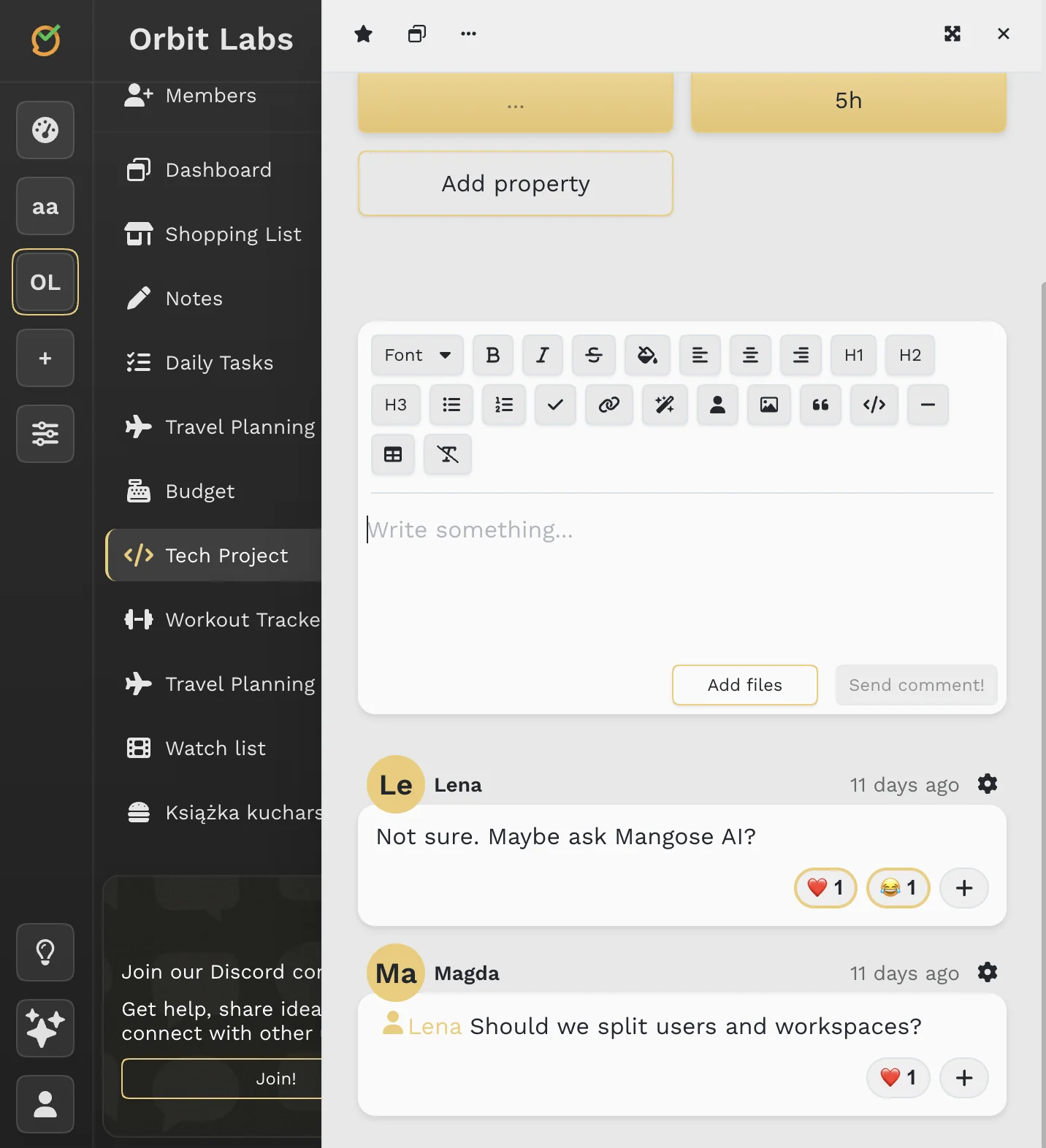
Async work is a way of collaborating where not everyone has to be available at the same time for work to move forward. Instead of relying only on meetings, fast replies, and constant notifications, the team creates a clear record of decisions, updates, and progress.
That does not mean people stop talking. It means communication becomes more structured, more contextual, and less dependent on who happens to be online at a given moment.
In practice, tasks, comments, and clearly described next steps work especially well here, because they connect communication directly with the actual work instead of separating the two.
Chat is fast, but speed does not always create clarity.
Important decisions can easily get lost between casual messages, reactions, and notifications.
After some time, it becomes hard to understand what a conversation was really about if it was not tied to a specific task or decision.
Constant questions and quick replies break focus and make deep work harder.
Something gets decided in chat, but execution happens somewhere else. Later, people have to search across tools for the real context.
New team members do not have one clear place where they can follow the history of decisions and progress.
The bigger the team and the more parallel topics, the easier it becomes to lose alignment, duplicate work, or miss important updates.
When discussion happens directly inside a task, everything stays in the right place. Goals, ownership, status, comments, and decisions are connected, so the team does not have to reconstruct context across different channels.
A task becomes more than a to do item. It becomes a collaboration point. That is where requirements can be clarified, questions can be asked, updates can be shared, and decisions can stay visible.
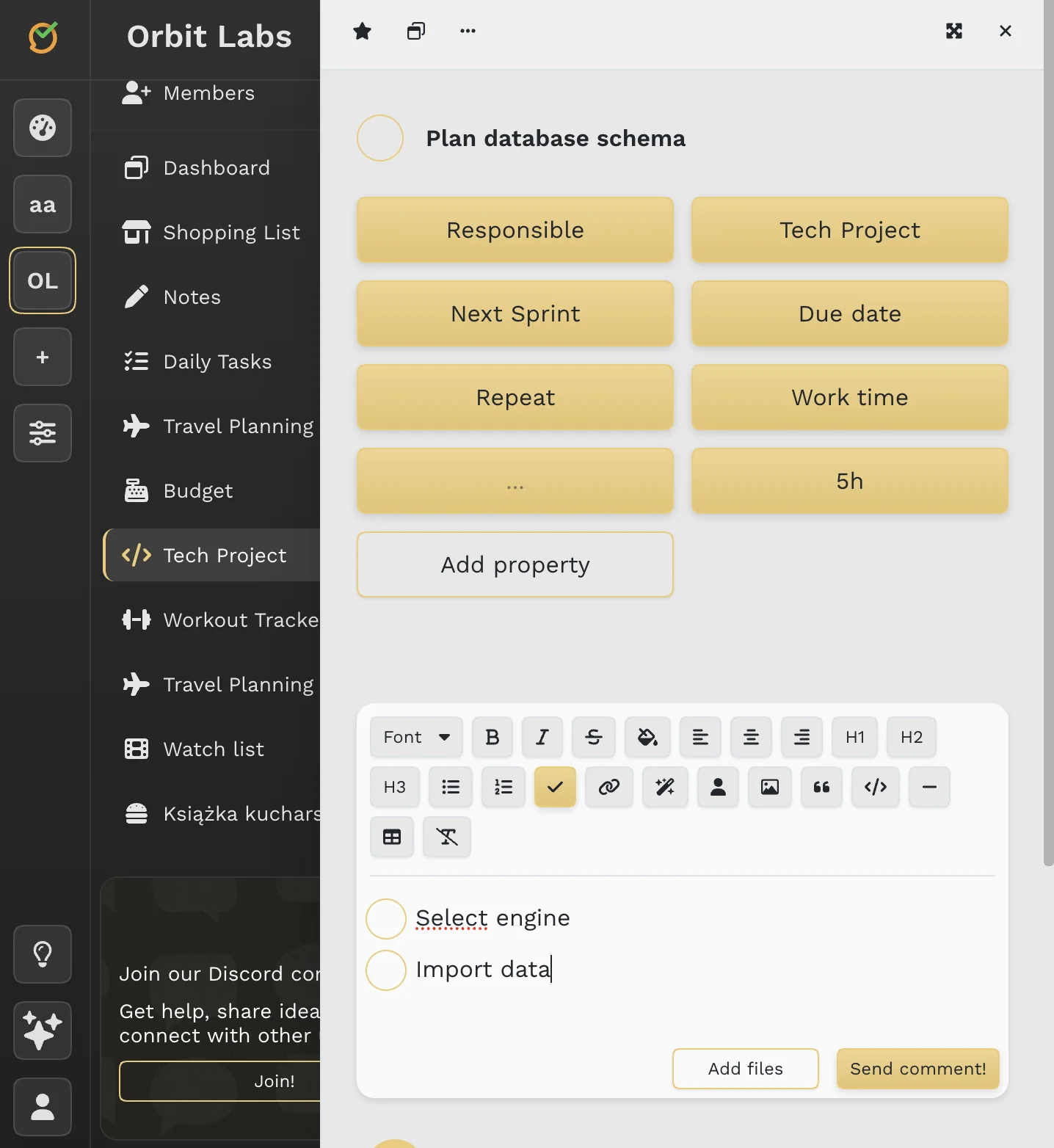
The team does not have to react instantly to every message. That creates more room for focused work.
When conversations stay connected to the task, it becomes easier to make better decisions and understand why they were made.
Everyone can see what has been agreed, who owns the task, and what stage the work is in.
Teams do not have to move information between chat, documents, and task managers because important communication happens where the work already exists.
The more people and parallel topics a team has, the more valuable structured task-based communication becomes.
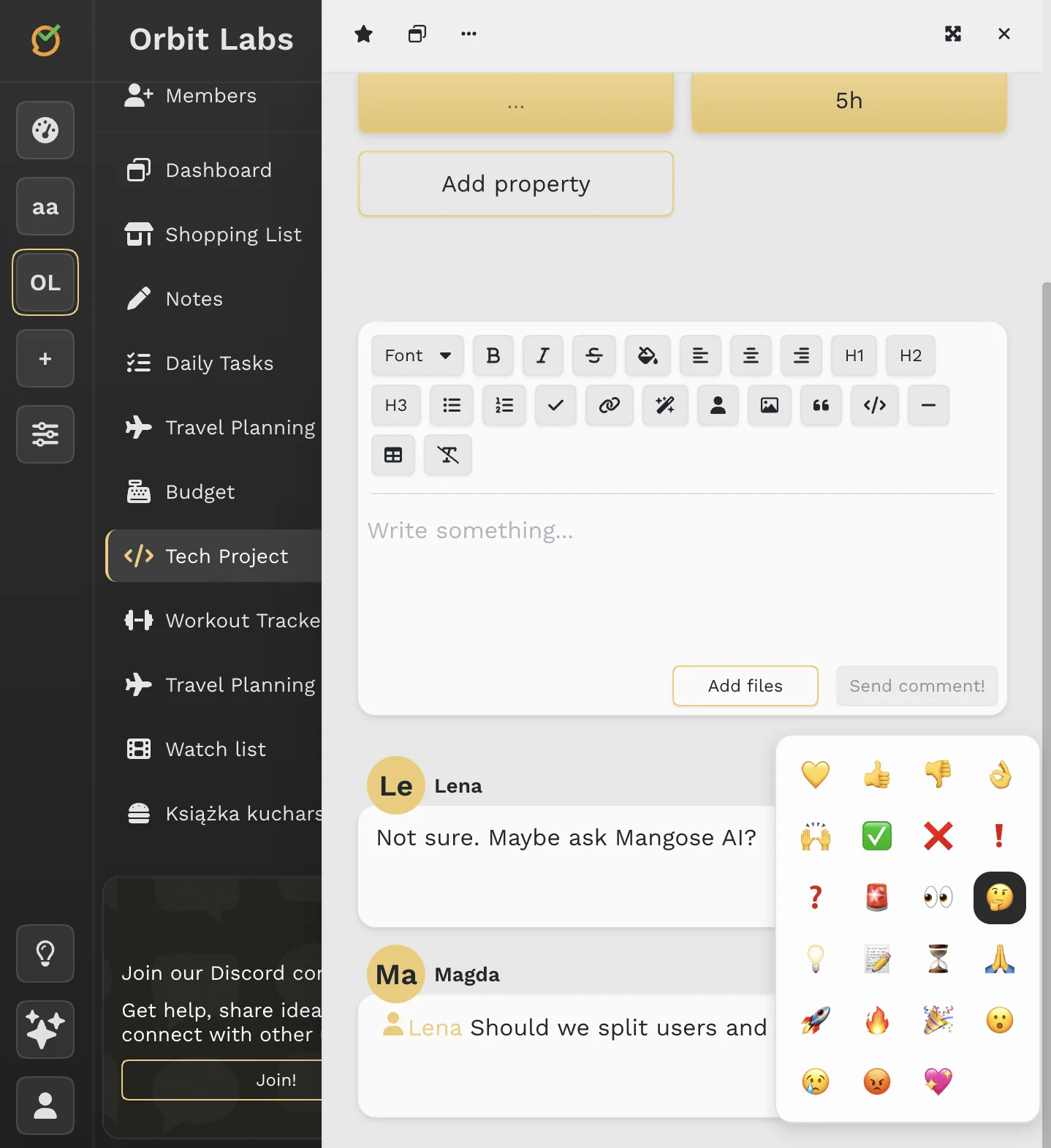
Here is a simple example of a more async way of working in a team.
Someone defines the topic, goal, scope, and owner.
Questions, clarifications, and decisions are added directly to the task.
Each person can return to the context when they have time and continue without losing track.
Even after the task is done, the process remains visible and useful for future reference.
Async work does not mean meetings and fast conversations are never useful. It works best when a team consciously decides what truly needs real time discussion and what can be explained more calmly through tasks and comments.
Mangose helps teams keep work and communication together. Tasks, comments, notes, and spaces live in one organized environment, so people can follow progress and collaborate with less noise.
Instead of spreading context across chat threads and disconnected tools, teams can keep discussions closer to the actual work and make collaboration easier to understand later.
Mangose helps with
The goal is not to replace every live conversation. It is to give the team a calmer default way to keep work moving.
Mangose helps teams organize tasks, comments, and collaboration in one place, making async work more practical and less chaotic.
Comments inside tasks bring structure to communication
Task comments make it possible to discuss work exactly where the topic lives. That means less re-explaining, less searching for message links, and less copying decisions from one tool to another.
This becomes especially useful when several people work on the same topic. Questions, answers, notes, and decisions all stay attached to the task, so anyone can return later and understand what happened without guessing.